
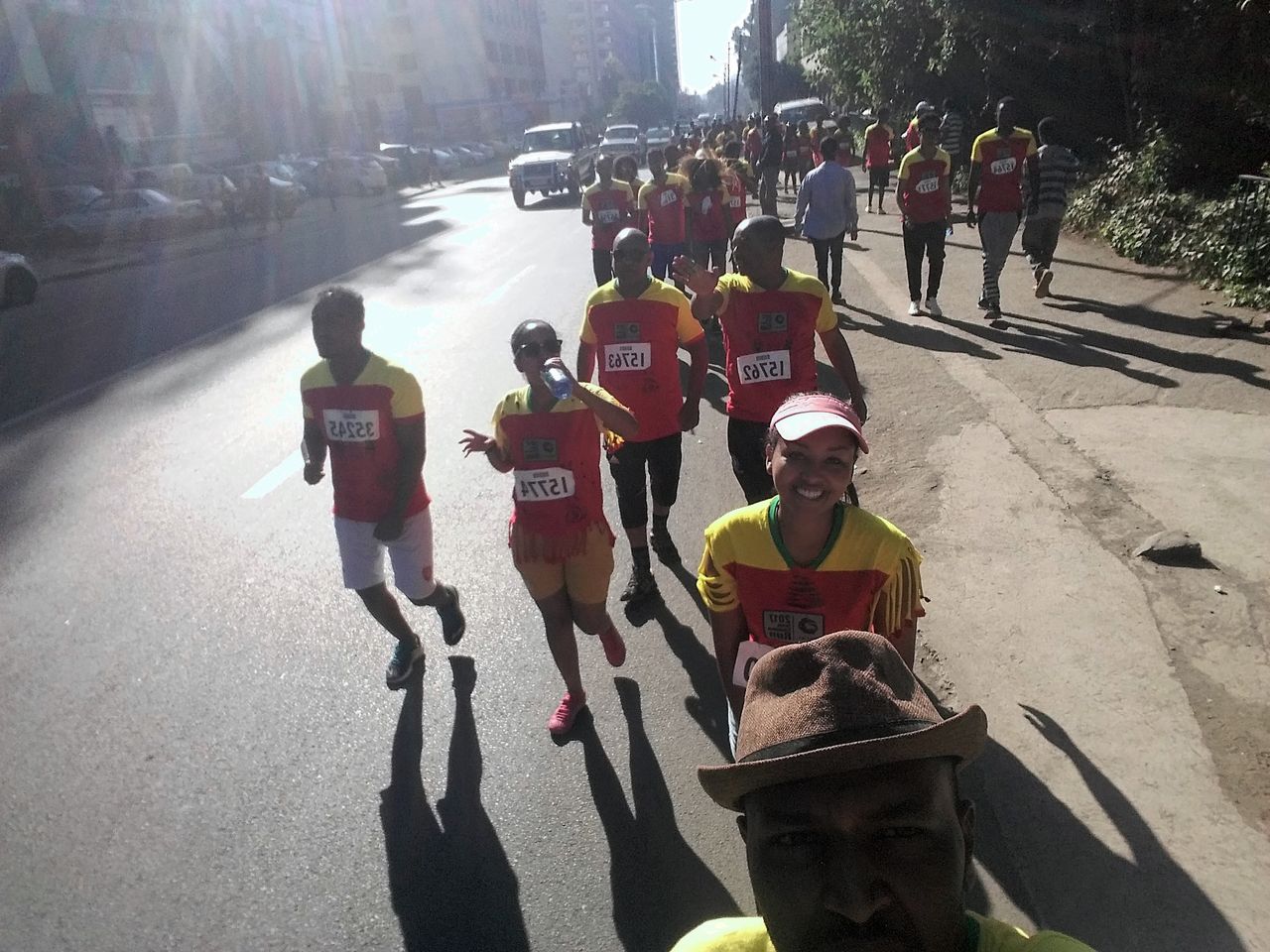
The streets of Addis Ababa were given over to runners on 22 November 2026 as the Great Ethiopian Run marked its 26th edition with a record turnout. Ethiopia’s state news agency, ENA, said more than 60,000 people took part in the 10-kilometre race, turning the capital into a celebration of athletics, national pride and international participation.
ENA described the event as Africa’s largest 10-kilometre road race. Around 200 international runners from 25 countries joined the field, a measure of the race’s growing appeal beyond Ethiopia and of the country’s standing in long-distance running. Prensa Latina, reporting the same figures, also called it the largest event of its kind on the continent.
The race was launched in 2001 by Haile Gebrselassie, the Ethiopian distance-running great and two-time Olympic champion in the 10,000 metres. What began as a major sporting competition has become an annual gathering that draws professional athletes, recreational runners and visitors into the same course through the city. ENA said that, over a quarter of a century, the event has brought together hundreds of thousands of participants from Ethiopia and abroad, making Addis Ababa a meeting point for a sport in which the country has long excelled.
This year’s anniversary edition was attended by Addis Ababa’s mayor, Adanech Abiebie, the tourism minister, Selamawit Kassa, Gebrselassie himself and other senior officials, ENA reported. The agency said the capital’s newly upgraded streets provided the setting for the race, with music, cultural performances and crowds of spectators along the route.
The atmosphere is part of what has made the Great Ethiopian Run distinctive. It is a serious race, but it is also a public festival. Families, club runners and elite athletes share the same morning in the same city, in a country whose distance runners have shaped the sport for generations. ENA said the event has become a vehicle for promoting Ethiopian culture, strengthening community bonds and connecting people across nationalities and generations.
That wider role extends to social and economic effects in the capital. According to ENA, the race has supported fundraising initiatives and youth-focused programmes, and it has drawn international visitors, contributing to tourism and business activity in Addis Ababa. A mass participation event of this size is also a display of organisation: roads are closed, volunteers line the course, and the city presents itself to guests from dozens of countries.
The race’s international standing has been recognised by World Athletics. ENA reported that the Great Ethiopian Run has been designated a World Athletics Heritage event, a mark intended to honour competitions that have made a lasting contribution to the sport. World Athletics maintains a Heritage listing for the race, placing it among events judged to have left a durable mark on athletics. The designation sits alongside the race’s reputation as a mass event that still matters to serious competitors.
The combination is unusual and, for Ethiopia, natural. Few countries have produced so many world-class distance runners, and few annual races manage to hold a popular festival and a competitive 10-kilometre event on the same course on the same morning. Gebrselassie’s founding idea, in 2001, was that the sport for which Ethiopia is known should also be a public occasion in the capital. Twenty-six editions later, the record field suggests that idea has taken hold.
Prensa Latina, reporting from the 2026 race, said the event once again placed Addis Ababa before an international audience, showing Ethiopia’s athletic tradition and the hospitality of a city that has continued to change around the course. ENA likewise pointed to the newly improved streets as part of the spectacle. For visitors among the 200 international runners, the race is both a competition and an introduction to the country.
Twenty-six years after Gebrselassie founded it, the Great Ethiopian Run is now a fixture in the African sporting calendar. Its latest edition, with a record field of more than 60,000, showed a city and a country at ease with a tradition they have helped to define. The medals will be remembered by those who won them. The larger image is of a capital filled with runners, flags and music, and of Ethiopia once again at the centre of a global running culture that it has done so much to build.
ENA put the point directly. Twenty-six years after its launch, the Great Ethiopian Run is more than a road race. It is a celebration of Ethiopia’s running tradition, a showcase of African sporting excellence and a demonstration of how sport can bring people together across borders. On Sunday, in record numbers, the country made that case in the most straightforward way: by filling its streets with runners.