
BERBERA — 24 November 2026
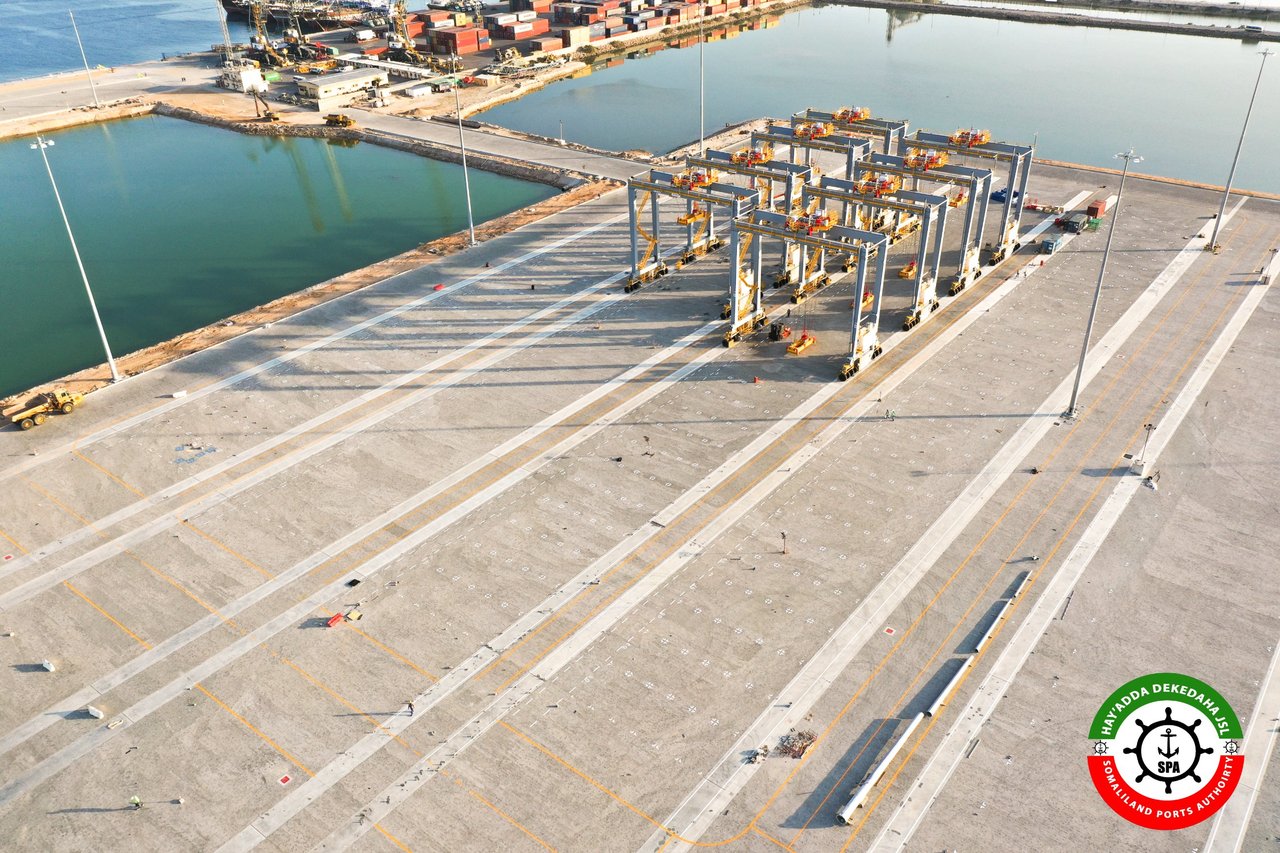
Somaliland's Berbera Port is emerging as an increasingly credible alternative to Djibouti, challenging the latter's longstanding dominance over Ethiopia's maritime trade. For decades, landlocked Ethiopia has relied heavily on Djibouti for access to international markets, leaving its import and export trade overwhelmingly dependent on a single maritime gateway.
But that dependence is gradually being challenged. Investments in Berbera's port infrastructure, coupled with the development of the Berbera Corridor connecting Somaliland to Ethiopia, are creating an alternative trade route that promises greater competition, shorter transport distances and lower logistics costs for Ethiopian businesses.
The transformation is beginning to produce measurable results.
A December 2025 independent evaluation commissioned by British International Investment (BII), titled Evaluating the Impact of BII's Investment in Ports in Somaliland, found that Berbera's average vessel turnaround time fell from 64 hours in 2018 to approximately 25 hours in 2024. The expansion also generated an estimated $8.4 million in transport cost savings in 2024 for port users.
The report also found that Berbera's competitive hinterland has expanded into parts of southeastern and northeastern Ethiopia, where shorter road distances give it an advantage over Djibouti. In Ethiopia's Somali Region, for example, the study estimated that transporting a 40-foot container through Berbera to Kebri Dehar costs approximately $2,585, compared with $2,806 through Djibouti.
A critical enabler of this shift has been the Berbera Corridor, whose road infrastructure upgrades were co-funded by the Abu Dhabi Fund for Development and the United Kingdom's Foreign, Commonwealth and Development Office. Completed in 2022, the upgrades have strengthened the connection between Berbera and the Ethiopian border, opening new possibilities for cross-border commerce and regional integration.
The strategic implications are significant. Berbera is no longer simply an ambitious infrastructure project competing for a share of regional maritime traffic. It is becoming a credible alternative in Ethiopia's search for diversified trade routes, potentially reducing the costs and risks associated with excessive dependence on a single port.