
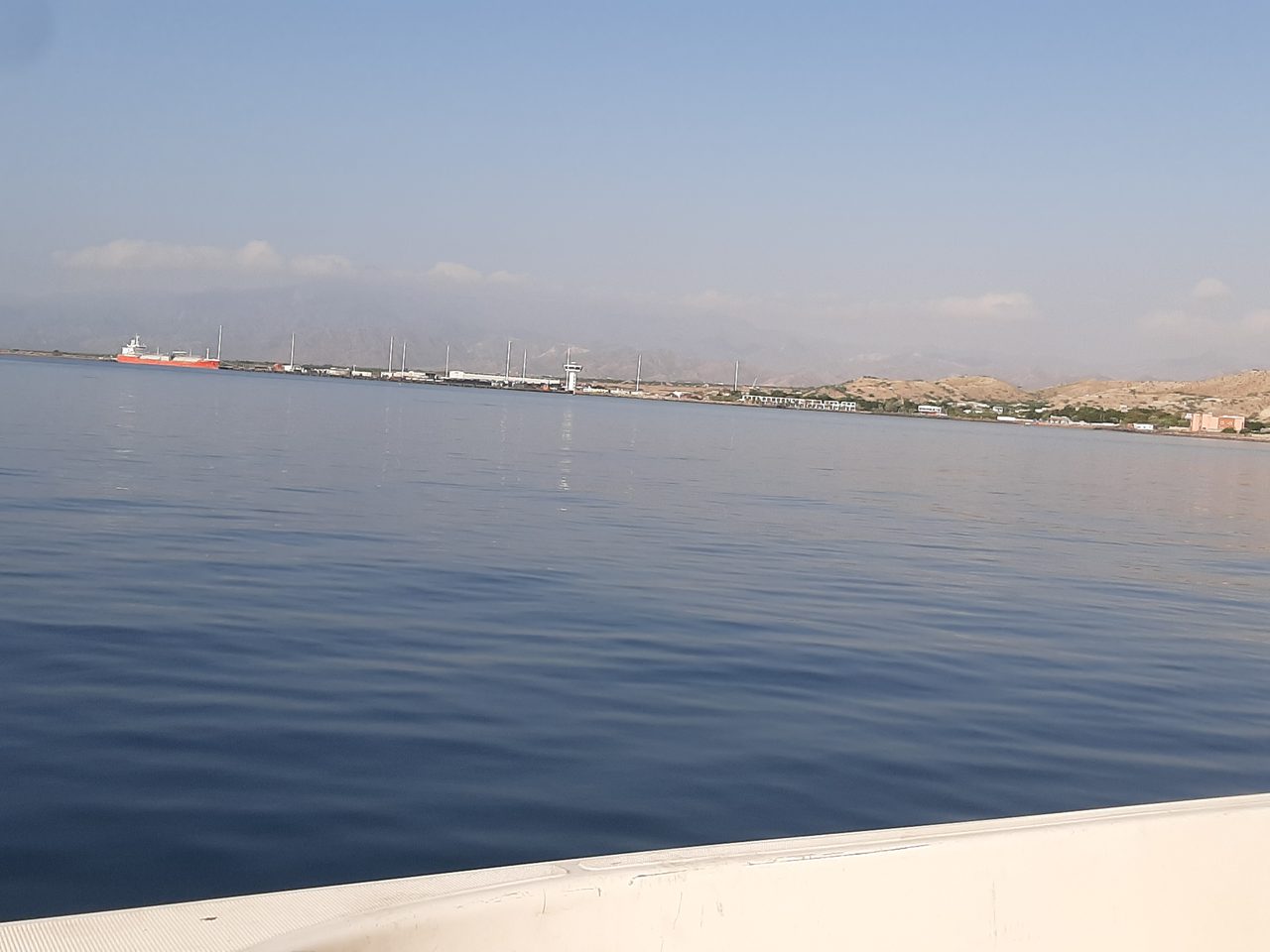
Djibouti has put the same Red Sea port in front of two different partners, eight months apart, and has not publicly explained which arrangement stands.
On 3 November 2025, the Djibouti Ports and Free Zones Authority recorded the signing, in Jeddah, of a framework agreement for a 30-year concession of the Port of Tadjourah. The parties were the Port of Tadjourah and Red Sea Gateway Terminal, the Saudi ports operator known as RSGT. The official DPFZA notice said the framework followed a memorandum of understanding signed between the same parties in March 2025, and described it as a “key milestone” in port and logistics cooperation between Djibouti and Saudi Arabia.
The document was signed by Kamil Mohamed Gorah, chairman of the Port of Tadjourah, and Gagan Seksaria, director of investments at Red Sea Gateway Terminal International Limited. DPFZA chairman Aboubaker Omar Hadi attended as a witness, together with Djibouti’s ambassador to Saudi Arabia, Dya-Eddine Said Bamakhrama, and Jens O. Floe, chief executive of RSGTi. Officials from the port, including its chief executive, Omar Hassan, were also listed as present.
The authority said the agreement was a step towards turning Tadjourah into a “world-class, multi-purpose port” with an initial handling capacity of 5 million tons a year and room for later expansion. The same notice said the project envisaged a dedicated free zone, and that the port would be equipped to handle fertilizers, grain, construction materials, containers and other general cargo, as well as mineral exports from Ethiopia, notably potash.
That was the official record in November 2025: a 30-year framework concession, signed in Jeddah, with a named Saudi operator and a published capacity target.
On 24 July 2026, a second arrangement appeared. Port Technology International reported that Tiryaki Agro, a private Turkish agribusiness company, and the same Djibouti Ports and Free Zones Authority had signed a memorandum of understanding “to explore the long-term development, modernisation and future operation of the Port of Tadjourah.”
The language of that MoU is more cautious than the RSGT framework. According to Port Technology, the two parties would assess the technical, commercial and operational framework for developing the port further. “Subject to further studies, negotiations and definitive agreements,” the project envisioned upgrades to infrastructure, expanded logistics and storage capacity, and improved handling of agricultural and bulk commodities. The MoU, the report said, also provided the basis for negotiating a long-term concession covering the port’s management and operation.
The report said the agreement built on an existing partnership between the International Finance Corporation and Tiryaki Agro, with the IFC having provided early-stage support, including feasibility studies, planning and stakeholder engagement.
Süleyman Tiryakioğlu, chief executive of Tiryaki Agro, was quoted as calling the MoU “an important step forward in our long-term commitment to Djibouti” and thanking the government, the DPFZA and the IFC. He said the parties would continue work “as we advance through the next phases of the project and explore its potential to strengthen regional trade, food security and sustainable economic development.”
Nothing in the official DPFZA notice of November 2025, or in the July 2026 trade-press account of the Tiryaki MoU, states that the RSGT framework has been cancelled, superseded or put on hold. Nothing states that the two processes are intended to run side by side. The public record, as it stands, is simply that a 30-year concession framework was signed with one partner, and that a later memorandum opened the door to a long-term concession with another.
The distinction between the two documents matters. A framework agreement for a 30-year concession is a more advanced instrument than an MoU that is expressly subject to further studies and definitive contracts. It is not, on the face of the official notice, a completed, fully documented concession with published terms. The Tiryaki text is still more preliminary. In both cases, Djibouti has signalled serious intent. In neither case has the authority published a clear account of how the later MoU sits beside the earlier framework.
Tadjourah sits on Djibouti’s northern coast, on the Gulf of Tadjoura, and has long been discussed as a complement to the country’s busier facilities around Djibouti City. The official notice placed the project in a wider strategy of positioning the country as a logistics hub on the Red Sea, “serving as a vital bridge between Africa, the Middle East, and global markets.” The later Tiryaki report used similar language: a logistics gateway connecting Africa, the Middle East and global markets.
The Ethiopian potash trade, mentioned in the DPFZA notice, is one of the cargoes that would give the port a clear hinterland. Ethiopia is landlocked; Djibouti already handles the bulk of its seaborne trade through other terminals. A northern port with room for bulk minerals, grain and fertilizers would, if built out, add another door to the same hinterland. That is a statement of official ambition, not a timetable. Neither public document sets a construction start date or a date for operations to begin under a new operator.
What can be said with confidence is narrow, and it is enough. In November 2025, Djibouti’s ports authority presented a 30-year framework concession with RSGT as a signed fact, complete with names, a venue and a capacity figure. In July 2026, the same authority signed an MoU with Tiryaki Agro that contemplates a long-term operating concession, subject to further work. Eight months later, no official clarification has been published on whether the Saudi framework remains live, whether the Turkish memorandum is a rival process, or whether Djibouti intends both partners to play a role.
Until that is explained, Tadjourah has two suitors and one unanswered question: who, in the end, gets the port?