
MOGADISHU — 24 November 2026
Somalia's presidency has denied reports that President Hassan Sheikh Mohamud agreed to let Uganda mediate between his government and the opposition over elections and the length of his term.
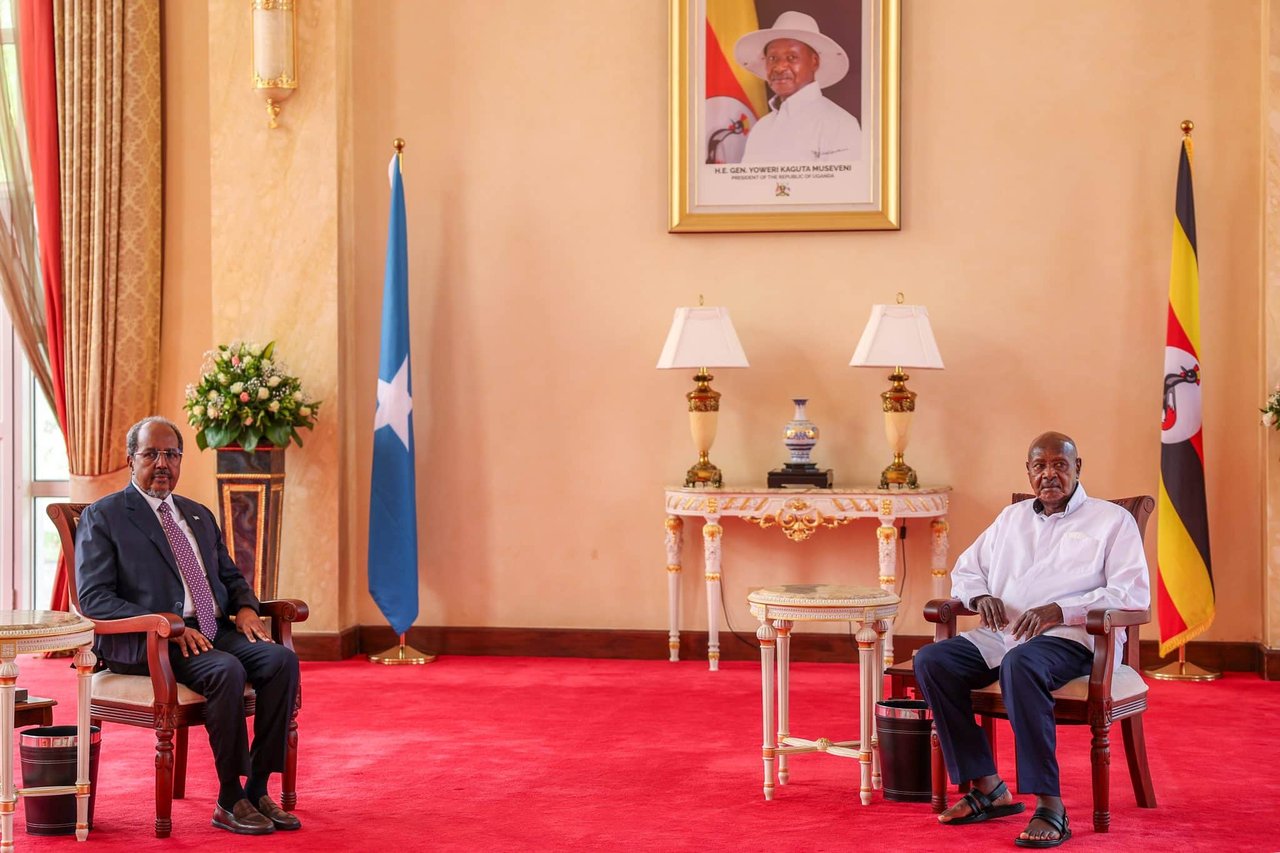
The reports spread on Monday after Mr Mohamud met President Yoweri Museveni at State House, Entebbe, for talks that produced a joint communiqué on security cooperation, African Union funding and trade. The document called for a stronger offensive against Al-Shabaab and recorded Mr Museveni's acceptance of an invitation to visit Mogadishu. It did not mention mediation, the opposition, or the disputed extension of the president's mandate.
A senior official at Villa Somalia, the presidential palace, told Somalia Today on Tuesday that Mr Mohamud had already ruled out foreign mediation and would never accept it. The official described the reports as "a fabrication being spread by the opposition and their supporters."
"The president has never accepted mediation by Museveni or Uganda, and that is not why he was invited to Mogadishu. If that were the case, it would have been stated in the joint communiqué," the official said, speaking on condition of anonymity so as not to create friction between the two governments.
"Domestic political matters are for Somalia to resolve, and they will be settled through a Somali-led dialogue," the official added. He said the joint communiqué was the only public statement the two sides had agreed, and that Uganda's foreign minister, Adonia Ayebare, might travel to Mogadishu to urge opposition leaders into direct talks with the president, but not as a mediator between them.
Those comments are an official denial, attributed to an unnamed presidency official and reported by a single outlet. They have not been issued as a formal statement in the president's name.
A crisis over the length of a term
The argument over mediation sits inside a deeper constitutional fight. In March, parliament amended the constitution to extend presidential and parliamentary terms from four years to five. On 5 November a Supreme Court panel ruled that the extension did not apply to those already in office, found that Mr Mohamud's mandate had expired in May, and ordered elections within 90 days.
The government rejected the ruling as void, arguing that Chief Justice Bashe Yusuf Ahmed had already been dismissed and therefore lacked the authority to issue it. Opposition leaders denounced the removal of the chief justice as a coup against the judiciary. Federal authorities maintain that the revised constitution allows the current leadership to remain in office until elections are held. Those are contested legal and political claims, not settled facts.
The Somali Future Council, an opposition coalition that includes the regional administrations of Puntland and Jubaland, boycotted government-convened talks that were due to open on 14 November. The coalition has demanded an international mediator and guarantees that any agreement would be carried out. Mr Mohamud has offered to meet opposition leaders at a venue of their choice.
Somalia's electoral commission has extended to 30 November the deadline for political groups to submit registration papers. Its timetable sets parliamentary elections for 15 April 2027 and the presidential vote for 15 May.
The shadow of an earlier deal in Kampala
For many Somali politicians, any mention of Uganda and an electoral deadlock summons the memory of the 2011 Kampala Accord. That agreement, reached when Mr Museveni helped then-president Sharif Sheikh Ahmed and the speaker of parliament end a standoff among transitional leaders, postponed elections and led to the resignation of the then prime minister, Mohamed Abdullahi Mohamed, known as Farmaajo. Mr Museveni signed as a witness.
That history helps explain why Monday's meeting, and the accepted invitation to Mogadishu, were read by some as the outline of a new mediation, even though the signed communiqué did not say so. The presidency's answer on Tuesday was that the comparison is misplaced, and that Somalia will handle its own political dispute.
Whether that denial ends the speculation is another matter. The opposition wants an outside mediator. The government says it will not accept one. The court ruling, the dismissal of the chief justice and the electoral timetable remain in conflict. Uganda's president is still expected in Mogadishu on a date yet to be fixed. The official record of the Entebbe visit remains the communiqué: security, money and trade, and no mediation mandate on the page.