
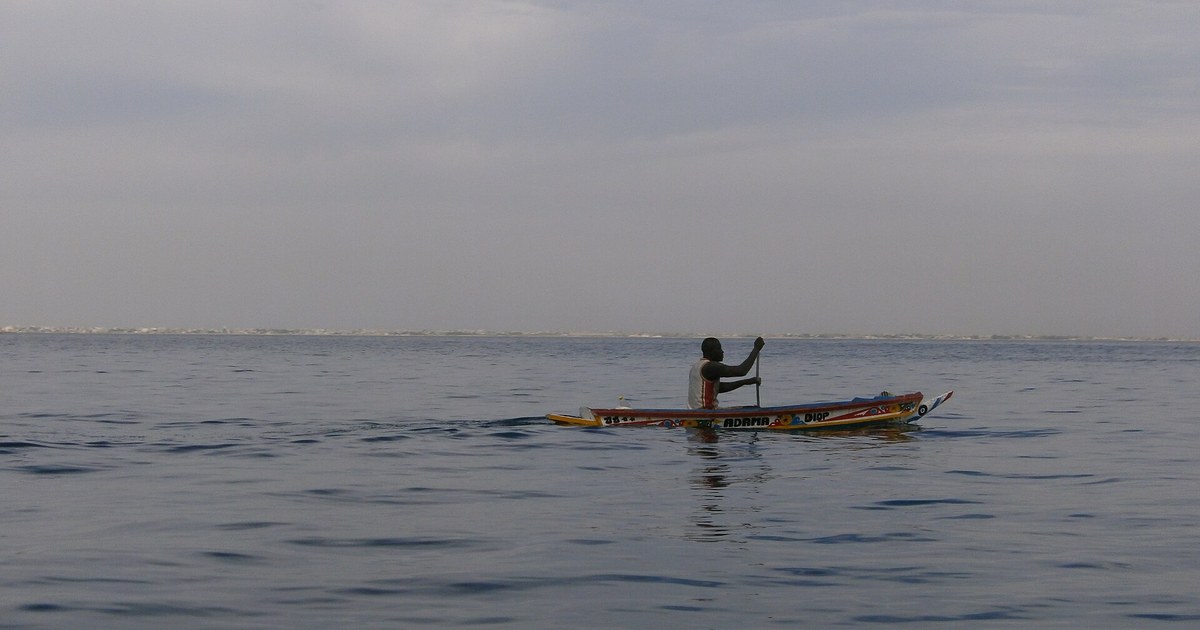
DAKAR — Rescuers are still searching the sea off Senegal after a wooden pirogue carrying migrants towards Spain's Canary Islands struck rocks and capsized near the coastal town of Yenne, south of Dakar.
Four bodies had been recovered by Thursday, Boubacar Seye, president of the non-profit Horizons Sans Frontières, told Reuters, according to Al Jazeera. A local official said at least 50 people were on board. The boat struck a rock while migrants were being transferred from smaller fishing boats to the larger pirogue. The number of people still missing remains unclear.
Agency photographs showed gendarmes inspecting the wreckage and specialist divers from Senegal's fire service returning to the beach after searching the area.
A route that is surging
The tragedy comes during one of the busiest periods ever recorded on the Atlantic route. Figures from Spain's Interior Ministry, reported by Al Jazeera, show that 24,364 migrants reached the Canary Islands between 1 January and 15 November this year, compared with 14,690 in the same period of 2025, an increase of nearly two-thirds.
The pace has accelerated sharply this month. By the end of October, 13,327 arrivals had been recorded, meaning 11,037 people reached the islands in the first 15 days of November alone.
Senegal's navy said it rescued or intercepted 1,424 people on 16 and 17 November, according to the Senegalese Press Agency. Just days before the capsizing, authorities announced that they had dismantled a suspected smuggling network in Yenne itself, arresting 14 people and seizing two boats, three engines and 12.5 million CFA francs.
'The strategy is not working'
The UN refugee agency says nearly 600 people have died trying to reach the Canary Islands from West Africa so far this year.
President Bassirou Diomaye Faye has called for greater efforts to create jobs for young people. At a cabinet meeting on Wednesday, he asked for a detailed assessment of the obstacles to curbing irregular migration, according to a government statement cited by Reuters.
Seye warned that enforcement alone would not end the deaths. "We need to wake up to the gravity of the situation. The strategy deployed until now is not working," he said. "We need to fix the root causes of this problem."
For families in Yenne and nearby fishing towns, the wait for news goes on.
Sources
- Al Jazeera: Four bodies recovered after Senegal boat capsizes amid migration surge
- BBC: Senegal boat disaster, dozens missing as migrant boat sinks
- AP: Migrant boat capsizes off Senegal's coast
- CBC: Dozens missing off Senegal as West African departures for Europe surge
- SeneNews: Drame au large de Yenne