
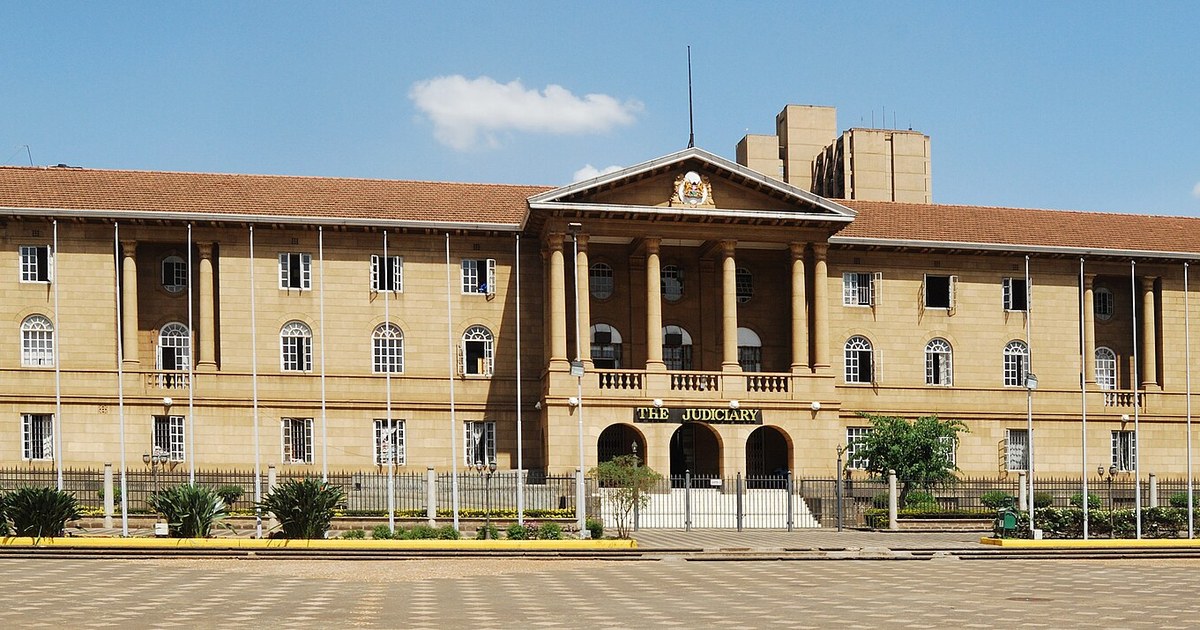
NAIROBI — Kenya's highest court spent years sitting on land it could not prove it owned, Chief Justice Martha Koome has revealed.
Speaking on Friday, 20 November, at the launch of the 12th State of the Judiciary and Administration of Justice Annual Report, for the 2025/2026 financial year, Koome said private individuals had grabbed Judiciary land, including the Supreme Court premises, and then dared the courts to act.
"Some people have no shame. They had even grabbed our Supreme Court land and told us to go to court, asking us which court we would go to," Koome said, according to Citizen Digital. She said the land had been recovered last year after President William Ruto intervened.
Three title deeds
Lands Cabinet Secretary Alice Wahome handed over three title deeds at the event, which Deputy President Kithure Kindiki also attended. Pulse Kenya reports that they cover the Supreme Court parcel, measuring 1.505 hectares, an adjacent parking lot of 0.4759 hectares, and a Judiciary plot in Kapsabet. All three are now registered in the name of the Judicial Service Commission rather than held in trust by the Treasury.
Wahome said the government had been surprised to find that the country's highest court had no formal ownership papers for its premises. She said people had been running businesses, including a parking business, on the neighbouring plot, but Pulse reports that she stopped short of confirming the Chief Justice's specific land-grabbing allegation, saying she could not independently verify it.
Judges' output revealed
The report also broke new ground. For the first time, it lists the recorded output of individual judges, magistrates, Kadhis and Small Claims Court adjudicators. On Thursday, Justice David Mburu had temporarily barred the Judiciary from publishing those figures after a petitioner, Duncan Kariuki, argued that the data had not been independently verified. On Friday, the judge discharged his orders, ruling that they had been overtaken by events, Daily Nation reported.
The Judiciary cautioned against reading the numbers as a league table. "The figures are not a ranking. They do not measure case complexity or the quality of decisions," the report states.
According to The Standard, the Supreme Court made 92 determinations during the year and the Court of Appeal 2,894. The High Court received 48,437 new cases and had 69,239 cases pending. Magistrates' courts received 389,952 cases and resolved 395,130.
The land revelation dominated Kenyan social media on Friday, where "Judiciary" was among the country's top trends.